
RootedGood is pleased to share the Fieldworks: Design Sprint Post-Event Report, a hopeful, practical, and highly actionable snapshot of what’s emerging where faith, land, community development, and mission-aligned finance meet. [Replace the short link with the report’s direct address.] Fieldworks is RootedGood’s research and design project on financing the development of church buildings and land.
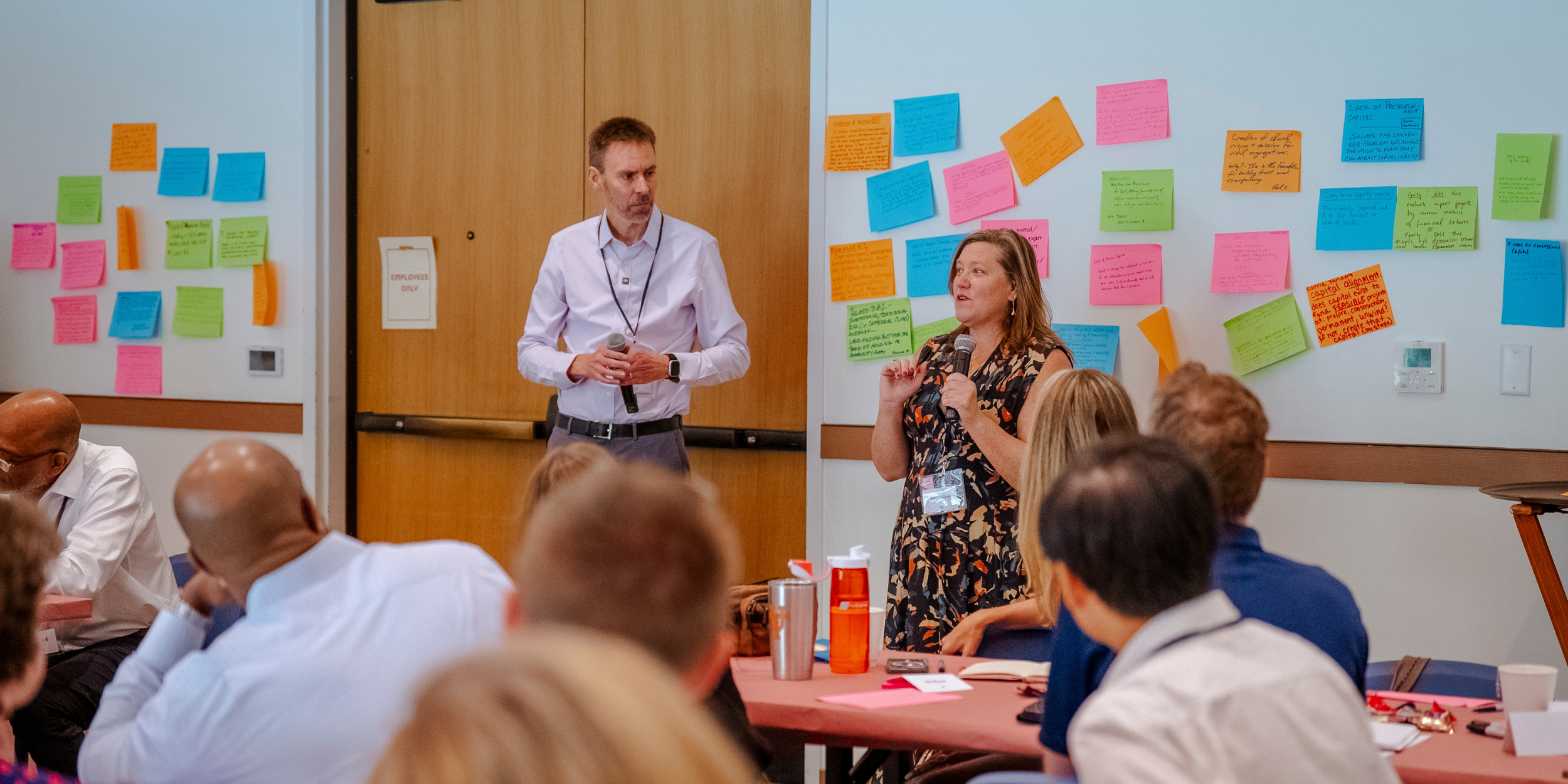
In November 2025, RootedGood brought together about 60 leaders from church institutions, finance, philanthropy, and community development for a three-day design sprint. The purpose was clear and urgent: to design solutions related to the movement of money that will help churches develop buildings and land for community good. What unfolded was not just conversation. It was collaboration, prototyping, and early commitments to push this movement forward.
Across the U.S., more than 350,000 church properties sit at the intersection of housing, community well-being, and spiritual life. Even if just 5% of them redevelop, that represents $450 billion in development potential, and at least $135 billion in subsidy needed to ensure these places serve mission, not just markets. The question is no longer if these properties will change hands, but whether they will be developed for community good or not.
Building on months of research and real-world case studies from Wisconsin, Georgia, California, and Pennsylvania, participants worked to turn shared learning into actionable designs. Five promising prototypes emerged:
A national pre-development research initiative to equip philanthropy.
A regenerative pre-development fund to recycle early capital.
A $2B blended national fund to finance mission-first church redevelopment.
A field-building convening entity to align networks and spread models.
A mission-aligned clearinghouse to reliably connect good projects with good capital.
These ideas, grounded in values of justice, faith, courage, and community, represent the early architecture of a new ecosystem: one capable of turning church property transitions into lasting community benefit.
Fieldworks was never meant to end in the room. Participants have already begun forming working groups, resourcing prototypes, and aligning efforts across regions and sectors. The work ahead is to move these prototypes into pilots with partners across sectors.